Dementia Friendly Bathroom Products
Dementia friendly bathroom products to support safety and independence at home or in care settings. Simple changes to colour and signage can make a meaningful difference for someone living with dementia. Our range includes coloured toilet seats for orientation, bathroom signs to help identify the right room, and grab rails that provide visible contrast against bathroom walls.
Read more
NO STOCK
NO STOCK
5.0
1
Rated 5.0 out of 5 stars based on 1 reviews
from €6.98
incl. VAT
NO STOCK

4.4
5
Rated 4.4 out of 5 stars based on 5 reviews
from €5.82
incl. VAT
Choosing Bathroom Products for People Living with Dementia
The bathroom presents specific challenges for people living with dementia. Guidance from the University of Stirling's Dementia Services Development Centre emphasises three key design principles for reducing confusion and supporting independent use: colour contrast, non-reflective surfaces, and clear signage.
Colour and contrast. White bathroom fittings blend into white walls and floors. Introducing strong colour contrast helps a person with dementia locate key fixtures. High-contrast toilet seats in red or blue are one of the most effective single changes. Accessible design standards recommend a minimum Light Reflectance Value (LRV) difference of 30 points between surfaces. Satin or matt finishes on fittings also help by eliminating confusing reflections.
Room recognition. People with dementia may not recognise a bathroom by sight alone. Clear bathroom signs combining both images and text can prompt recognition and reduce the anxiety of searching for the right room. Signs are most effective when placed at eye level or slightly below. Leaving the door open can also help.
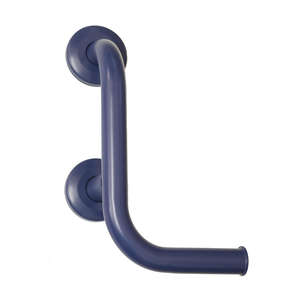
Fall prevention. People living with dementia are four to five times more likely to fall than older adults without cognitive impairment. Grab rails in contrasting colours provide both physical support and a visual reference point. Non-slip surfaces and consistent flooring colours further reduce risk.
FAQs
What makes a bathroom dementia friendly?
A dementia friendly bathroom uses colour contrast to make fittings visible against walls and floors. It also uses non-reflective surfaces to prevent confusing glare and clear signage to help the person find the right room. The NHS and University of Stirling both recommend familiar-looking controls rather than modern sensor-operated fittings. Small changes to colour and layout can significantly reduce confusion and fall risk.
Why are coloured toilet seats recommended for people with dementia?
White toilet seats are difficult to see against a white bathroom. A red or blue toilet seat creates strong visual contrast that helps a person with dementia locate and recognise the toilet independently. Accessible design standards recommend at least 30 points of difference in Light Reflectance Value between the seat and surrounding surfaces. Satin finishes are preferred over gloss to avoid reflections.
How do bathroom signs help someone with dementia?
People with dementia may no longer recognise a room by its appearance alone. A bathroom sign combining a clear image with simple text can prompt recognition and guide the person to the right room. Signs are most effective when placed at or slightly below eye level. Leaving the bathroom door open alongside a visible sign can also help.
Are your bathroom products suitable for care homes and hospitals?
Yes. Our dementia friendly bathroom products are used in residential care homes and NHS settings across the UK. Coloured toilet seats and bathroom signs are available in multiple sizes and fixing styles to suit different environments. Care home and NHS customers can request a quotation for larger orders.
Can I claim VAT relief on dementia bathroom products?
Yes. If you or the person you are buying for has a long-term illness or disability you may be eligible for VAT relief. Dementia and Alzheimer's disease both qualify as chronic conditions under HMRC rules. Eligible products will show a VAT relief option during checkout. You will need to provide a brief declaration confirming the qualifying condition.


